
Understanding India’s National Action Plan on Climate
At Vijayash Foundation, we are committed to fostering a sustainable future by empowering communities with knowledge and actionable solutions to combat climate change. One of India’s most significant efforts in this direction is the National Action Plan on Climate Change (NAPCC), launched on June 30, 2008. This comprehensive policy framework outlines India’s strategy to address climate change while promoting sustainable development and economic growth. In this blog, we dive into the NAPCC, its objectives, key components, and why it matters for every Indian.
What is the NAPCC?
The NAPCC is India’s blueprint for tackling climate change, guided by the Prime Minister’s Council on Climate Change (PMCCC). It aims to balance India’s developmental goals with climate resilience through a multi-pronged, long-term, and integrated approach. The plan emphasizes protecting vulnerable communities, reducing greenhouse gas emissions, and deploying innovative technologies to create a sustainable future.
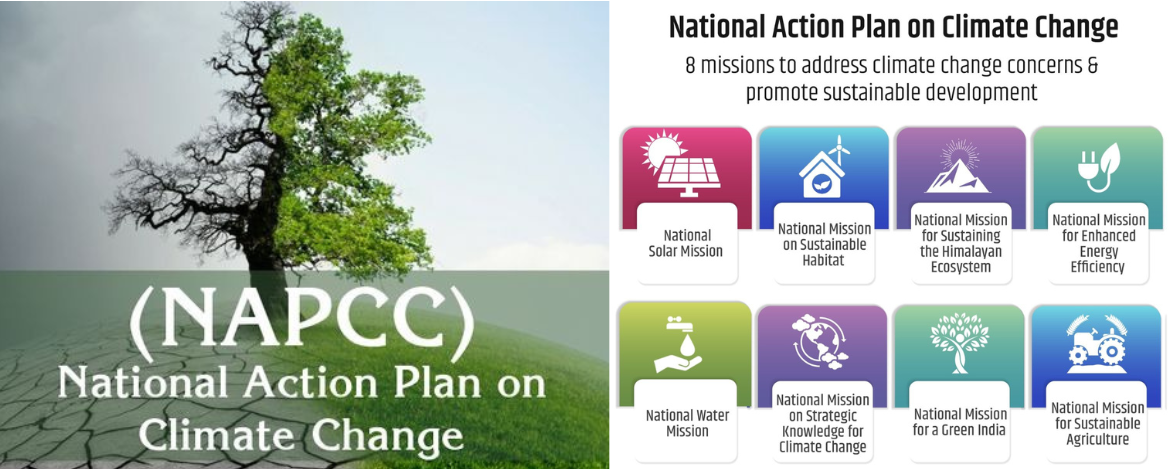
The NAPCC is built on eight core National Missions, each targeting a critical area of climate action. These missions are designed to promote awareness, foster collaboration, and drive measurable outcomes. Let’s explore each mission in detail.
The Eight National Missions of NAPCC
1. National Solar Mission (Jawaharlal Nehru National Solar Mission)
Launched in 2010, this mission aims to make solar energy a cornerstone of India’s energy mix. It targets achieving 100,000 MW of solar power capacity and promotes research, domestic manufacturing, and decentralized solar systems. Programs like the KUSUM scheme support farmers with off-grid solar pumps, reducing reliance on fossil fuels.
2. National Mission for Enhanced Energy Efficiency (NMEEE)
This mission, launched in 2009, focuses on reducing energy consumption in industries and buildings. Through initiatives like the Perform, Achieve, and Trade (PAT) scheme and the Energy Conservation Building Code (ECBC), it encourages energy-saving practices and incentivizes efficient technologies.
3. National Mission on Sustainable Habitat
Launched in 2010, this mission promotes climate-resilient urban planning. It emphasizes energy-efficient buildings, sustainable public transport, and improved waste management. Programs like the Atal Mission for Rejuvenation and Urban Transformation (AMRUT) align with its goals to create greener cities.
4. National Water Mission
Approved in 2014, this mission aims to improve water use efficiency by 20% to combat water scarcity exacerbated by climate change. It focuses on integrated water resource management, pricing mechanisms, and sustainable practices in agriculture and urban areas to address issues like droughts and floods.
5. National Mission for Sustaining the Himalayan Ecosystem
This mission, formally approved in 2014, seeks to protect the Himalayan region’s biodiversity and glaciers, which are critical water sources. It supports research, state-level climate action plans, and initiatives like seabuckthorn cultivation to prevent soil erosion.
6. National Mission for a Green India
Launched in 2014, this mission targets afforestation of 6 million hectares of degraded forest lands and aims to increase India’s forest cover to 33%. It integrates with programs like MGNREGS to restore ecosystems and enhance carbon sequestration.
7. National Mission for Sustainable Agriculture
Also launched in 2014, this mission promotes climate-resilient farming practices to enhance agricultural productivity, especially in rainfed areas. It focuses on developing climate-resistant crops, expanding weather insurance, and improving soil and water management.
8. National Mission on Strategic Knowledge for Climate Change
This mission builds a robust knowledge system to support climate research and policy. It funds climate science studies, fosters international collaboration, and establishes state-level Climate Change Cells to assess vulnerabilities and build capacity.
Guiding Principles of the NAPCC
The NAPCC is rooted in principles that prioritize:
-
Inclusive Growth: Protecting vulnerable communities through sustainable development.
-
Ecological Sustainability: Reducing emissions while promoting economic growth.
-
Technological Innovation: Accelerating the adoption of climate-friendly technologies.
-
Global Cooperation: Aligning with international frameworks like the Paris Agreement.
Achievements of the NAPCC
Since its inception, the NAPCC has driven significant progress:
-
Renewable Energy Boom: The National Solar Mission contributed to India’s target of 175 GW of renewable energy by 2022, with ambitions to reach 450 GW.
-
Energy Savings: The PAT scheme has reduced energy consumption in industries, saving costs and emissions.
-
Green Cover Expansion: The Green India Mission has advanced afforestation efforts, enhancing biodiversity and carbon sinks.
-
State-Level Action: States like Tamil Nadu and Karnataka have developed State Action Plans on Climate Change (SAPCCs), aligning with NAPCC goals.
Challenges and the Road Ahead
Despite its successes, the NAPCC faces challenges:
-
Implementation Delays: Slow approval and execution of missions have hindered progress.
-
Funding Gaps: An estimated $2.5 trillion is needed to meet climate goals, requiring innovative financing.
-
Monitoring Issues: Inconsistent tracking of mission outcomes limits accountability.
-
State Coordination: Aligning state-level plans with national objectives remains complex.
At Vijayash Foundation, we believe these challenges are opportunities for collective action. By supporting public awareness, advocating for policy reforms, and fostering community-driven initiatives, we can amplify the NAPCC’s impact.
Why the NAPCC Matters to You
Climate change affects us all—rising temperatures, erratic monsoons, and extreme weather events impact agriculture, water availability, and livelihoods. The NAPCC empowers India to build resilience and reduce emissions while ensuring equitable growth. As citizens, we can contribute by:
-
Adopting energy-efficient practices at home.
-
Supporting local conservation efforts.
-
Advocating for sustainable policies in our communities.
Join Vijayash Foundation in Supporting the NAPCC
At Vijayash Foundation, we are dedicated to creating a climate-resilient future. We invite you to join us in spreading awareness about the NAPCC and taking action. Whether it’s planting trees, conserving water, or supporting renewable energy, every step counts.
Let’s work together to make India a global leader in sustainable development! Share this blog, engage with our initiatives, and stay tuned for more updates on how we can combat climate change together.
Follow us on LinkedIn for more insights and updates.
#ClimateChange #NAPCC #Sustainability #GreenIndia #VijayashFoundation




:%20A%20Roadmap%20to%20a%20Sustainable%20Future&media=https://vijayashfoundation.org/wp-content/uploads/2025/05/NAPCC.png)